Welcome: Jiangsu Hongjing Metal technology Co.,Ltd







yolanda@hongjingmetal.com +86-15358997067
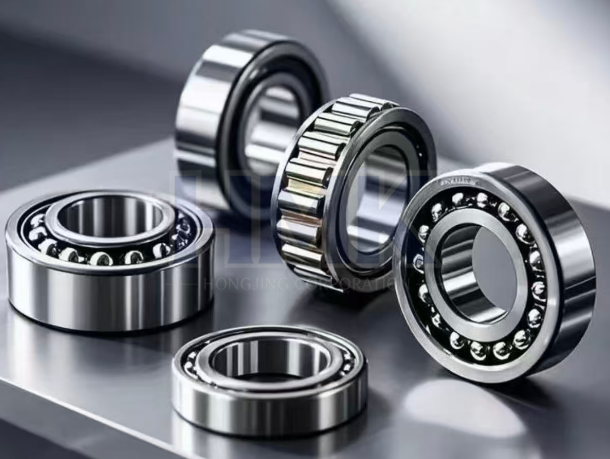
Ball bearings and roller bearings are the two major families of rolling bearings.
This is one of the top Google search questions for mechanical engineers and global bearing purchasers.
Ball bearings use spherical steel balls as rolling elements. Their main strengths: low friction, adapt to high rotating speed, affordable cost. Deep groove ball bearings, the most common type, support radial load plus a small amount of axial load.
They are ideal for light to medium load applications: fans, small motors, household machinery and general transmission equipment. The limitation is relatively low load capacity.
Roller bearings use cylindrical, tapered or spherical rollers instead of balls. Line contact between rollers and raceway delivers much higher load carrying capacity and rigidity.
They handle heavy radial loads, shock loads very well. Typical applications: gearboxes, heavy conveyors, mining equipment, large gear reducers. The trade-off is lower maximum speed compared with ball bearings.
Simple Selection Guide
1. Light/medium load, high RPM, simple working condition → Ball bearing
2. Heavy load, impact load, high rigidity requirement → Roller bearing
3. Combined radial + axial heavy load → Tapered roller bearing / Spherical roller bearing
Many buyers only check the dimension and ignore load type, which results in short service life.
Send us your equipment load, speed and operating temperature, we can recommend the proper bearing type and model.
Contact: Yolanda
Phone: +86-15358997067
E-mail: yolanda@hongjingmetal.com
Add: No.88, Qianyao Road, Binhu District, Wuxi, China
LiveChatclose
 Send Email
 Skype
 WhatsApp