Welcome: Jiangsu Hongjing Metal technology Co.,Ltd







yolanda@hongjingmetal.com +86-15358997067
Industrial bearing statistical research confirms a critical fact: more than 80% of premature bearing failures are triggered by improper lubrication. For heavy-duty rolling bearings like F series double row full complement cylindrical roller bearings, reliable lubrication directly decides their actual service cycle.
Lubrication failure includes insufficient grease, deteriorated lubricant, wrong grease type and blocked lubrication channel. Poor lubrication leads to direct metal friction, rapid temperature rise and fatigue damage.
Standard lubrication management is the most economical and effective way to extend bearing life.
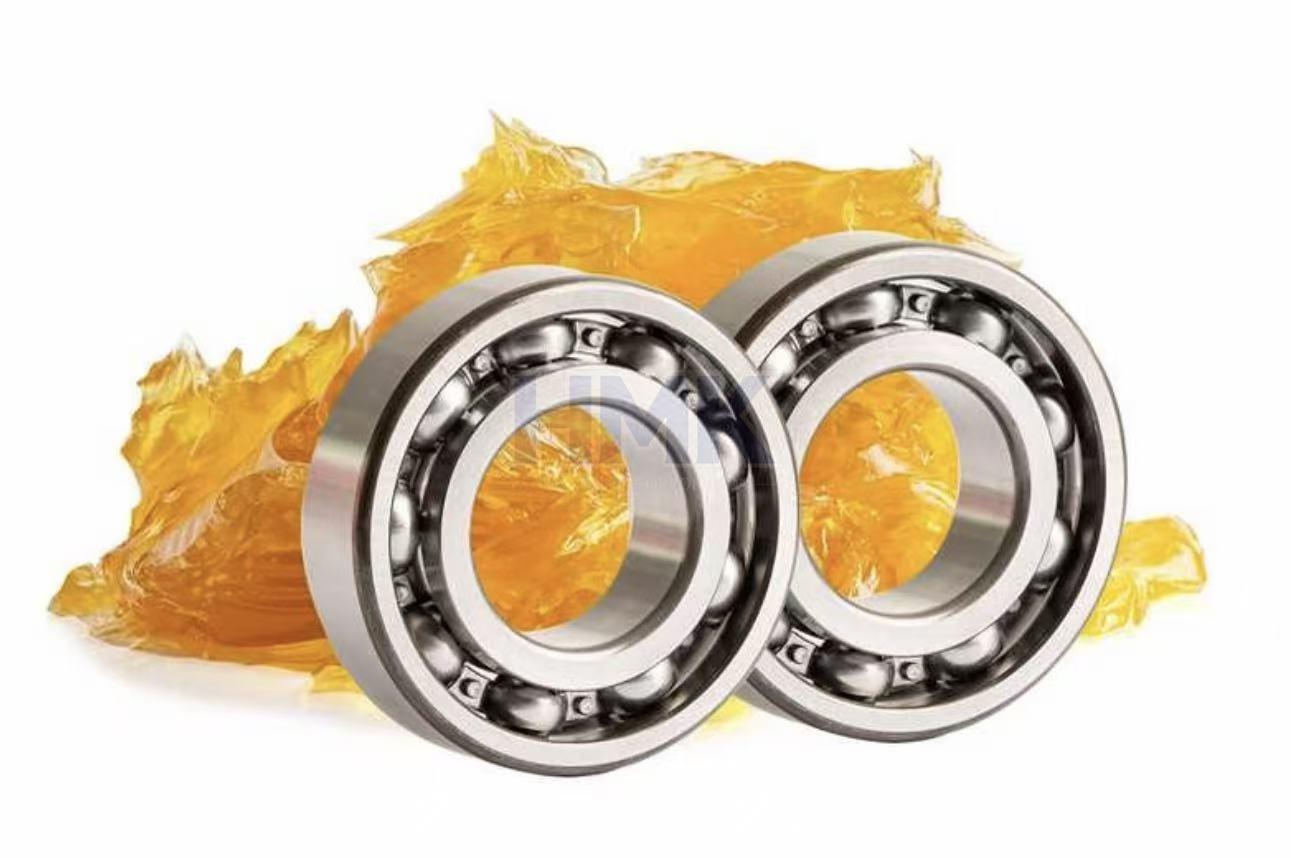
Lubricant forms a protective oil film between rolling elements and raceways. Once lubrication fails, the isolation layer disappears, leading to direct metal friction, sharp temperature spikes, and rapid fatigue spalling. Even high-precision, heavy-load bearings will wear out far ahead of design life without scientific lubrication management.
4 Main Types of Bearing Lubrication Failure
All lubrication-related bearing damage falls into four typical categories, which frequently occur on machinery, gearboxes, lifting and metallurgical equipment:
1. Insufficient lubricant / Under-greasing
Long-term lack of supplementary grease cannot form a complete oil film. Rolling surfaces rub against each other, generating high heat and micro wear.
2. Deteriorated & expired lubricant
Grease oxidizes, loses viscosity or mixes with dust, water and metal debris after long operation. Failed lubricant loses anti-wear and heat dissipation capacity.
3. Wrong grease type matching
Using lubricant with mismatched viscosity, temperature resistance or additive formula. Incompatible grease mixtures will break down rapidly under load.
4. Blocked lubrication pipeline & over-greasing
Clogged grease channels cut off lubricant supply; excessive grease filling causes internal churn heat, raising bearing operating temperature sharply.
Hidden Hazards of Ignoring Lubrication Standards
• Continuous metal friction creates abrasive particles, triggering secondary scratching on raceways and rollers
• Abnormal temperature rise accelerates steel material fatigue, forming surface spalls and cracks
• Unstable operation brings extra vibration, noise and even sudden bearing seizure
• Frequent premature replacement raises equipment maintenance and procurement costs
Most Cost-Effective Solution: Standard Lubrication Management
Compared with replacing damaged bearings, standardized lubrication maintenance is the cheapest and most efficient way to maximize bearing service life. We summarize core operation rules for industrial cylindrical roller bearings:
1. Select matched grease according to working speed, load, temperature and environment (high-load F series full complement bearings require high-viscosity extreme-pressure grease)
2. Follow fixed regreasing cycles; replenish lubricant regularly for continuous running equipment
3. Control filling volume: fill 30%–50% of bearing internal free space, avoid over-greasing
4. Keep lubrication pipelines unobstructed, clean old grease residue before adding new lubricant
5. Regularly check lubricant status to replace deteriorated grease timely
Conclusion
Lubrication failure ranks first among all bearing failure causes. Mastering standardized lubrication rules can effectively avoid 80% premature bearing damage, cut equipment downtime and reduce spare part replacement costs.
If you need customized lubrication suggestions for F series double row full complement cylindrical roller bearings or other industrial bearings, contact our technical team for professional guidance.
Contact: Yolanda
Phone: +86-15358997067
E-mail: yolanda@hongjingmetal.com
Add: No.88, Qianyao Road, Binhu District, Wuxi, China
LiveChatclose
 Send Email
 Skype
Skype WhatsApp