Welcome: Jiangsu Hongjing Metal technology Co.,Ltd







yolanda@hongjingmetal.com +86-15358997067
Bearing overheating is one of the most common and destructive premature failures in industrial rotating machinery, including motors, gearboxes, conveyor systems, automation equipment, and heavy industrial processing machines. Sustained high-temperature operation not only reduces bearing service life drastically but also causes equipment shutdown, production loss, and even mechanical seizure accidents.
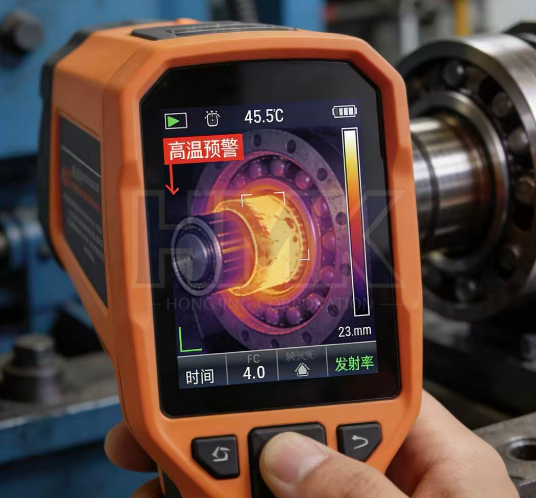
Main Root Causes of Bearing Overheating
Most bearing overheating issues stem from improper installation, incorrect lubrication, poor operating conditions, and mechanical misalignment. The typical causes are summarized as follows:
1. Excessive Preload and Insufficient Internal Clearance
Over-tight installation, excessive interference fit, or improper preload adjustment will eliminate bearing internal clearance. Rolling elements generate continuous rigid friction during operation, rapidly accumulating internal heat. Long-term zero-clearance operation leads to metal fatigue and early thermal failure.
2. Improper Grease Filling (Over-lubrication / Under-lubrication)
Lubrication failure is the No.1 cause of bearing overheating. Too little grease cannot form a complete oil film, resulting in metal-to-metal contact and dry friction. Too much grease causes severe churning resistance; rolling elements stir redundant lubricant continuously, producing massive frictional heat and causing grease carbonization.
3. Shaft and Housing Misalignment
Shaft deflection, housing deformation, or installation misalignment leads to uneven load distribution on bearing raceways. Local over-pressure generates concentrated heat, triggering partial overheating and accelerated wear.
4. Overload Operation and Continuous High-Speed Running
Operating beyond the bearing’s rated load or speed limit exceeds the designed bearing capacity. Continuous heavy-load friction raises operating temperature rapidly, softens bearing steel structure, and induces permanent deformation.
5. Poor Heat Dissipation and Blocked Ventilation
Sealed equipment structure, dusty working environment, blocked cooling channels, or high ambient temperature prevent heat dissipation. Accumulated heat cannot be discharged, forming a high-temperature cycle inside the bearing chamber.
Hazards of Long-Term Bearing Overheating
Persistent high temperatures trigger progressive bearing damage: bearing steel hardness decreases, material thermal softening occurs, surface fatigue cracks expand, lubricant fails and deteriorates, and finally leads to peeling, seizure, and complete bearing scrappage. Unplanned downtime and frequent replacement greatly increase industrial operation and maintenance costs.
Effective Improvement and Preventive Solutions
1. Standardize Lubrication Management
Adopt quantitative and regular greasing standards according to bearing models and operating speeds. Avoid over-filling or insufficient lubrication. Select high-temperature resistant, industrial-grade grease matching the working environment to ensure stable oil film protection.
2. Control Installation Precision and Preload Strictly
Standardize bearing installation processes, control interference fit tolerance reasonably, and maintain standard internal clearance. Adjust preload accurately to eliminate rigid friction caused by excessive compression.
3. Correct Shaft Misalignment and Mechanical Calibration
Regularly calibrate shaft concentricity and housing levelness, repair deformed parts, and ensure uniform bearing stress during operation.
4. Avoid Long-Term Overload and Over-Speed Operation
Operate equipment within the bearing’s rated parameters. Arrange reasonable operation intervals to reduce continuous high-load friction loss.
5. Optimize Heat Dissipation Environment
Clean ventilation and cooling systems regularly, remove dust and blockages, and ensure effective heat circulation for high-speed and high-temperature equipment.
Summary
Bearing overheating is avoidable with standardized installation, scientific lubrication, and standardized operation. Timely diagnosis of overheating causes and implementation of improvement measures can effectively extend bearing lifespan, stabilize mechanical operation, and reduce enterprise maintenance costs.
Contact: Yolanda
Phone: +86-15358997067
E-mail: yolanda@hongjingmetal.com
Add: No.88, Qianyao Road, Binhu District, Wuxi, China
LiveChatclose
 Send Email
 Skype
Skype WhatsApp